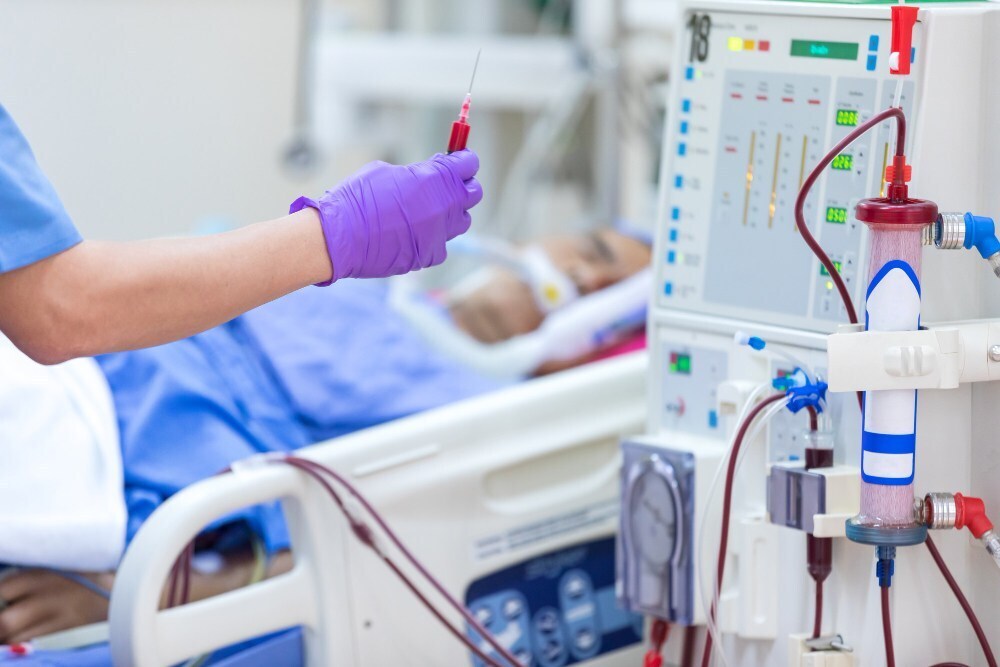
Kidney-related diseases are common in Nepal. These kidney-related problems can lead to serious health challenges such as kidney failure and chronic kidney disease (CKD). Many economically disadvantaged patients find it hard to pay their treatment fees to treat these problems. For those patients, Venus Hospital offers free dialysis services in Nepal. We use high-quality dialysis machines, an experienced nephrology team, and a compassionate medical staff to treat patients in the proper way.
In this blog, we provide the details regarding what dialysis is, its types, and when the patient needs dialysis. Along with it, we also give some insights about the importance of early diagnosis and regular kidney checkups, the free dialysis program by the government of Nepal, the free dialysis service at Venus hospital, and the best nephrology doctor at Venus hospital.
Dialysis is a medical treatment in which extra fluid, toxins, and waste products (urea, creatinine, and acids) are removed from the blood to maintain proper kidney function. It helps to maintain the balance of electrolytes (Sodium, potassium, and calcium) with the help of dialysis solution. The patient may need to do dialysis temporarily or may need it permanently, depending on the condition of the kidneys. If the kidney failure is reversible, then patients may require dialysis for several weeks or months; otherwise, the patient needs to undergo dialysis for the lifetime until he/she transplants a kidney.
There are altogether 2 types of dialysis. Both of them serve similar kinds of functions, i.e, removing the waste product, extra fluids, toxins, and giving the electrolytes. These electrolytes include sodium (Na), potassium (K), calcium (Ca), and bicarbonate (HCO3). In Hemodialysis, the blood is filtered outside the body by using a machine, whereas in peritoneal dialysis, the blood is filtered inside the body by using the peritoneal membrane. These 2 types of dialysis are as follows:
Dialysis is required when your kidneys are unable to work properly or cannot remove waste, salt, and extra water from your blood. This can result in acute kidney failure (sudden loss of kidney function) or chronic kidney disease (gradual loss of kidney function over time). Here are some of the common indicators shown when dialysis is essential to maintain the body’s balance and prevent serious complications.
Early diagnosis and regular kidney checkups are essential for better kidney health. These diagnoses can help to prevent kidney damage, detect early problems, and maintain overall body balance. Below are some of the importance of undergoing early diagnosis and regular kidney checkups.
Early Diagnosis
Regular Kidney Checkups
The average dialysis cost in Nepal is NPR 2,500 for a single session. Therefore, for those patients who cannot afford the cost, the government has organized the program which includes the free dialysis service for the economically disadvantaged patient. Some of the free dialysis programs organized by the government are as follows:
Venus Hospital is one of the healthcare centers that offer free dialysis service in Nepal. This healthcare center feels proud to offer free dialysis service in Nepal and to support the patients who are suffering from kidney-related diseases. This free dialysis service aims to help patients become kidney disease-free, especially those who lack financial support. At Venus Hospital, we use advanced equipment, expert nephrologists, and compassionate care to offer the best possible outcomes to every patient.
The core mission of the Venus hospital is to provide comprehensive and compassionate care to every patient. Additionally, we prioritize providing quality kidney care by applying modern, and high-quality technologies to offer free dialysis services in Nepal. By using the advanced technologies, the dialysis team can reduce the burden of chronic kidney disease and improve patient outcomes by offering continuous, reliable and patient-centered care. Due to these patient-centered services, Venus Hospital ranks as a top hospital in Nepal.
Free dialysis services are available for those patients who meet the low-income criteria that are set by the government of Nepal. Additionally, the patient also needs to meet specific medical criteria for the end-stage renal disease. By providing free dialysis service, we help economically disadvantaged patients in maintaining their health and improve their quality of life.
In Nepal, Venus Hospital is one of the leading hospitals that provides the free dialysis service with compassionate care and modern facilities. To get that, you need to follow the step-by-step processes. The step wise processes for applying the free dialysis service includes:
1.Contact the Hospital: In the first step, you need to contact the administration directly to confirm whether the hospital is accepting new patients for the government’s free dialysis scheme. You can contact us at the numbers 011-660781. The patient can also use email (info@kbhospital.com.np).
2.Inquire About Required Documents: After contacting the hospital, you need to ask for the list of documents that are required for the free dialysis service from the social service department or administration.
3.Obtain necessary certifications: In this step, you need to obtain several necessary documents that are required for free dialysis. These include:
4.Register and Schedule: After submitting the documents, if the hospital found that you are included in low income criteria, the hospital will register you for the program and schedule your dialysis sessions.
There are various facilities that are available for dialysis patients. The Venus hospital offers each of the facilities with dedicated care and advanced medical support. Some of the key facilities and services are as follows:
If you are worried about kidney diseases and their problems, make sure that you are consulting with well-experienced nephrology doctors at Venus Hospital. An experienced nephrology doctor can diagnose, treat, and manage kidney-related conditions effectively. One of the well-experienced nephrology doctors is Midan Shrestha.
Speciality – Nephrology
NMC Number – 8205
Qualification – MBBS, MD, DM (Nephrology)
Dr Midhan Shrestha is an experienced nephrology doctor at Venus Hospital. He is dedicated to providing comprehensive care for patients who have kidney-related diseases. Dr. Shrestha is well-experienced in diagnosing, treating, and managing chronic kidney disease, acute kidney injuries, and other kidney disorders. Dr. Midhan ensures that each patient should receive compassionate care to achieve better outcomes and improved overall health.
Venus Hospital is a healthcare center that offers free dialysis service in Nepal. This hospital plays a crucial role in treating the kidney patients of Nepal. Venus Hospital ensures free dialysis therapy using cutting-edge equipment, skilled nephrologists, and compassionate care for patients from low-income backgrounds. Patients can also enhance their quality of life with the aid of this free service.
In this blog, we have provided the information regarding what dialysis is, its types, and when the patient needs dialysis. Along with it, we have also given insights on the importance of early diagnosis and regular kidney checkups, the free dialysis program by the government of Nepal, the free dialysis service at Venus hospital, and the best nephrology doctor at Venus hospital. For further information regarding health, feel free to check out some other blogs. Similarly, if you are in search of free dialysis service in Nepal, contact Venus Hospital – one of the free dialysis service providers in Nepal.